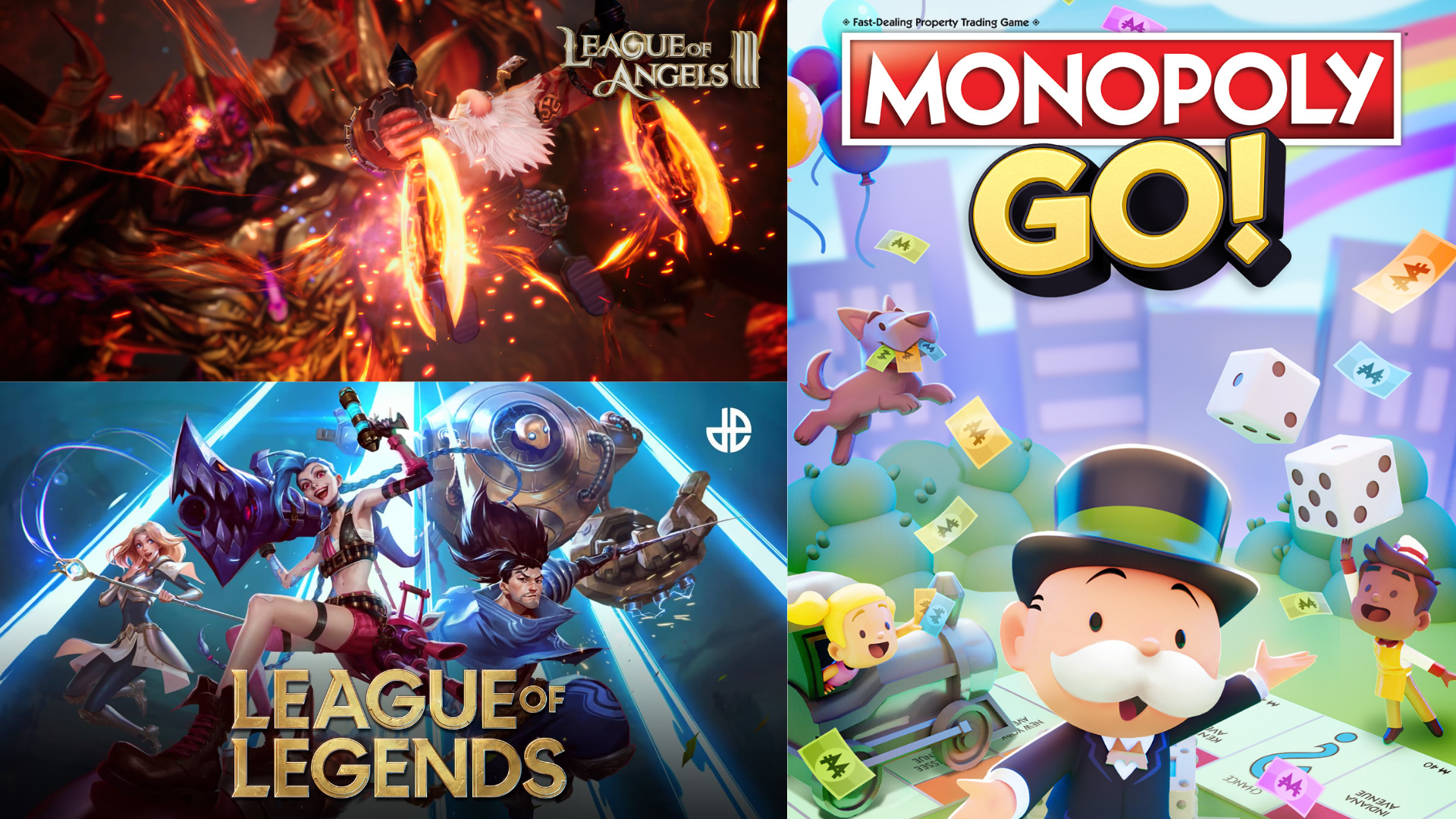


In recent years, the gaming industry has emerged as one of the world’s most profitable sectors, significantly impacting the global economy. This trend is evidenced by the size of the online gaming market, which has now surpassed the combined revenues of the film and music industries. Driven by advances in technology and a growing demand for immersive entertainment, gaming is now a leading economic force, attracting investments and offering diverse job opportunities across the globe. In order to avoid the saturation, content creation needed to be continuously fresh to the players satisfaction. Therefore, the impact of continuous art creation becomes more and more large in the current gaming context.
How Continuous Art Creation Impacts Live Service Games?
For live service games (LSGs), continuous art creation goes beyond updating visual assets. It’s a strategic lever that fosters ongoing engagement. As games evolve from static releases to community-focused, constantly updated experiences. And also meeting players’ demands for fresh content has become a core requirement. Today’s players expect frequent visual and gameplay updates that keep their interest alive, resulting in deeper engagement and longer retention.
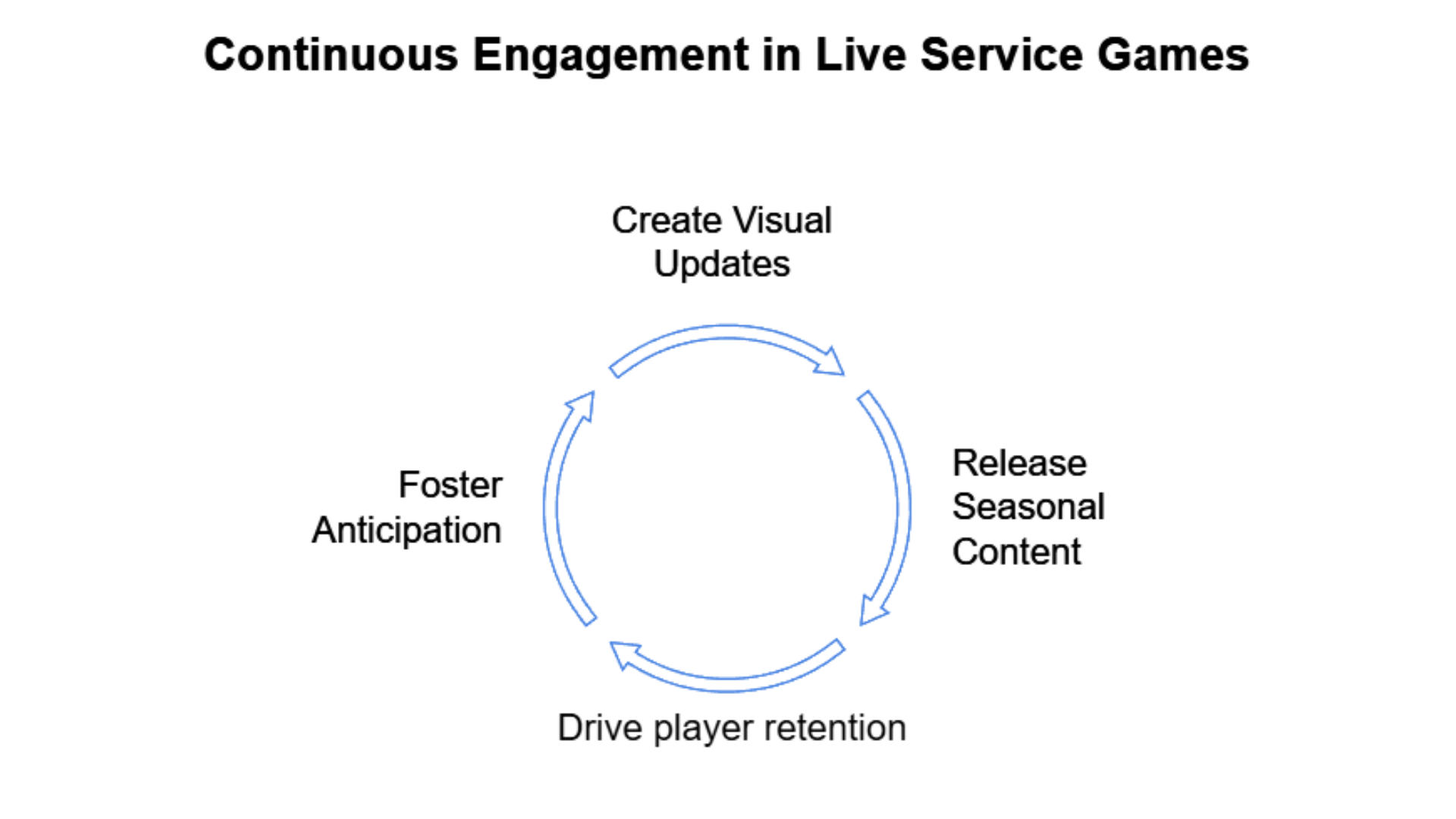
Games such as Fortnite, Genshin Impact, and Destiny 2 lead by example, offering players exciting visual updates, seasonal themes, and unique content that set a high standard. These updates drive player retention and create anticipation for new releases, illustrating why continuous content is now a non-negotiable for successful live service games.
Why Continuous Art Creation is important for Live Service Games?
Art creation is the heart of a game’s identity, shaping how players perceive the world and drawing them deeper into the experience. In live service games (LSGs), where ongoing engagement is key, continuous art updates are crucial. Regularly introduced new characters, environments, skins, outfits, and visual designs ensure that players feel excited and immersed. And the game evolves to meet their ever-changing expectations. These updates don’t just maintain visual interest. But they also can keep the game world fresh and dynamic, making each update feel like a new chapter in the ongoing story.
Take World of Warcraft (WoW) as a prime example. Since its launch in 2004, WoW has thrived by consistently refreshing its visual design through expansions like Dragonflight. Each new update adds more than just gameplay which is fresh zones. In order to improved textures, and updated animations breathe new life into the game. These continuous art updates have played a huge part in keeping WoW relevant for almost two decades. What sets WoW apart from many other games is Blizzard’s unique approach to art creation. While they occasionally collaborate with external partners for specific assets, Blizzard retains most of the creative process in-house. This ensures that the game’s visual identity remains cohesive while benefiting from the specialized skills of external teams when needed.
By balancing in-house expertise with strategic outsourcing, WoW has maintained a high standard of visual quality. Therefore, it is constantly evolving to stay ahead of player expectations. The combination of immersive art and gameplay updates is what allows World of Warcraft to develop. Otherwise, this game can keep its massive player base engaged and ensure that the game stays exciting, even after nearly 20 years.
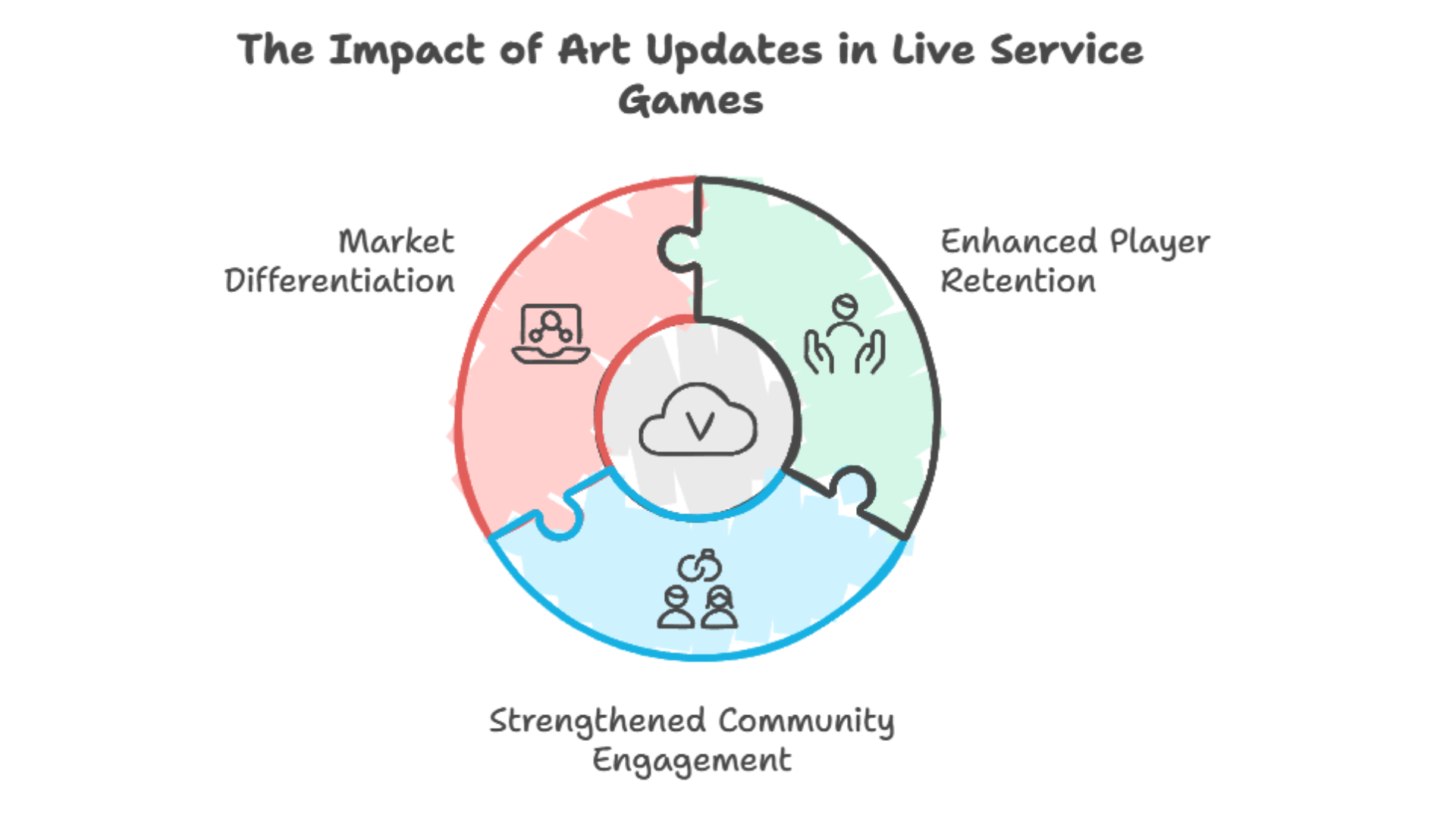
Enhanced Player Retention
Regular content updates keep players engaged by offering fresh experiences, from visual overhauls to new skins and event-based themes. These updates make returning to the game feel rewarding, encouraging long-term engagement.
Strengthened Community Engagement
Visual updates can drive community interaction by introducing new themed events. Players look forward to these events, which spark conversations, build excitement, and deepen their connection to the game.
Market Differentiation
As the gaming market grows more competitive, consistent art updates give games a distinct edge. By offering regular visual updates, developers not only keep their current player base engaged but also attract new players. These updates help set a game apart from others in its genre, ensuring it stays fresh and appealing in a crowded marketplace.
However, despite this rapid growth, low player engagement remains a major challenge, as not all games achieve high retention rates worldwide. This makes player engagement increasingly critical, emerging as a key performance indicator (KPI) for a game’s success. High engagement rates not only indicate that players are enjoying the experience. But also drive long-term revenue, boost community growth, and support the game’s overall longevity. To maximize engagement, many developers focus on delivering consistent, high-quality updates. And especially for live service games to meet and exceed player expectations.
How Continuous Art Creation Meets Modern Player Expectations
Releasing update patches is one of the most common methods developers use to sustain and boost player engagement. Today, player demands are more rigorous due to fierce competition in updates among top gaming companies. Players expect not only consistent content updates but also high art quality. All of which ultimately serve to increase a company’s revenue through a larger base of active users. Higher levels of player engagement can also foster positive electronic word of mouth (eWOM). Which attracts more players organically. Even negative eWOM, if used effectively, can guide developers in continuously improving in-game quality.
To meet these evolving expectations, many developers rely on continuous art creation. In order to deliver both fresh gameplay elements and visually immersive experiences that deepen players’ connection to the game and reinforce engagement.
In a survey conducted by the Entertainment Software Association, over 70% of players indicated a preference for games that offer regular updates and new content. This sentiment reflects the growing importance of visually evolving game worlds, where players feel their feedback is reflected in the game’s ongoing development. As seen with League of Legends and Call of Duty: Warzone, regularly updated skins, maps, and game events give players a sense of belonging and influence within the game.
Adapting Art to Player Preferences and Market Trends
As player expectations evolve, particularly with the demand for better graphics and more immersive storytelling, continuous art creation has become essential to keep up. Unlike the past, today’s PC and console games can be updated seamlessly and frequently, thanks to automated services that pull data from the internet. This has significantly changed both how games are developed and what players expect. With a greater emphasis on community feedback, developers now focus more on providing ongoing art updates that match player preferences and trends, ensuring that the game remains visually engaging and relevant.
To adapt game art to meet player preferences and market trends, developers often combine in-house and outsourcing strategies, each with distinct advantages and challenges:
In-House Art Teams
Developing art assets in-house gives studios complete creative control and allows them to maintain a consistent art style that aligns with the game’s vision. However, this approach can be costly, as it requires ongoing investment in talent, technology, and training. Teams need access to tools and processes like player data analytics and an efficient art pipeline to stay relevant and produce quality assets on a regular schedule. Additionally, studios need to monitor player feedback and game performance data continually, which requires significant internal resources.
Game Art Outsourcing
Outsourcing art production is an efficient way for developers to scale up content production without the overhead of a large, permanent art team. This approach is ideal for live service games that require regular updates to keep players engaged. By working with specialized art studios, developers can quickly produce high-quality assets that resonate with current player trends, without diverting in-house resources from core gameplay development. Outsourcing also allows studios to remain agile, adapting their production scale to seasonal demands or major updates.
Both strategies have proven valuable for modern game development. Many successful live service games blend both methods, creating a flexible and adaptive production model that maintains high player engagement through continuous, on-trend updates.
Thunder Cloud Studio is the ideal partner for game art creation in Live Service Games
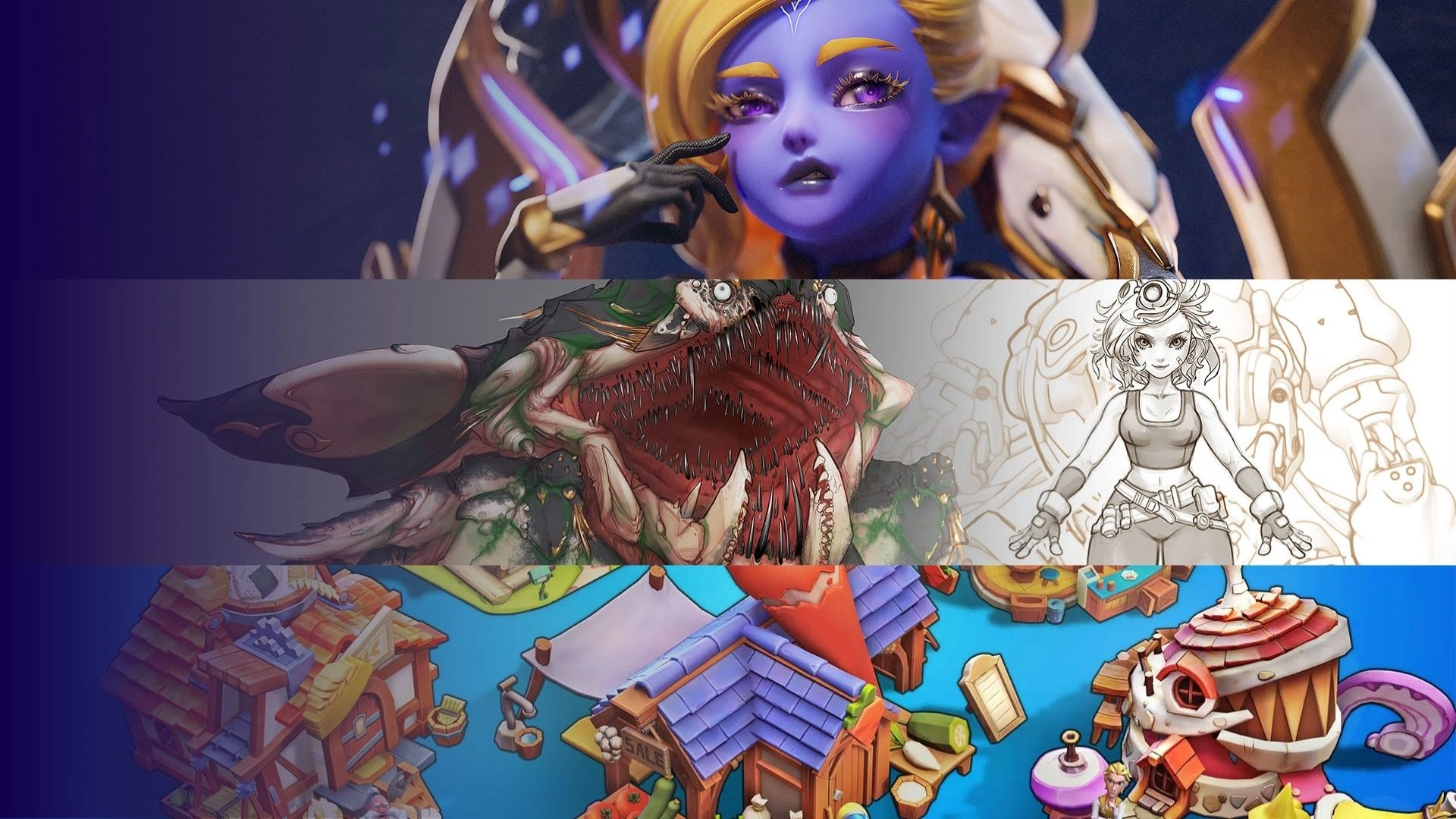
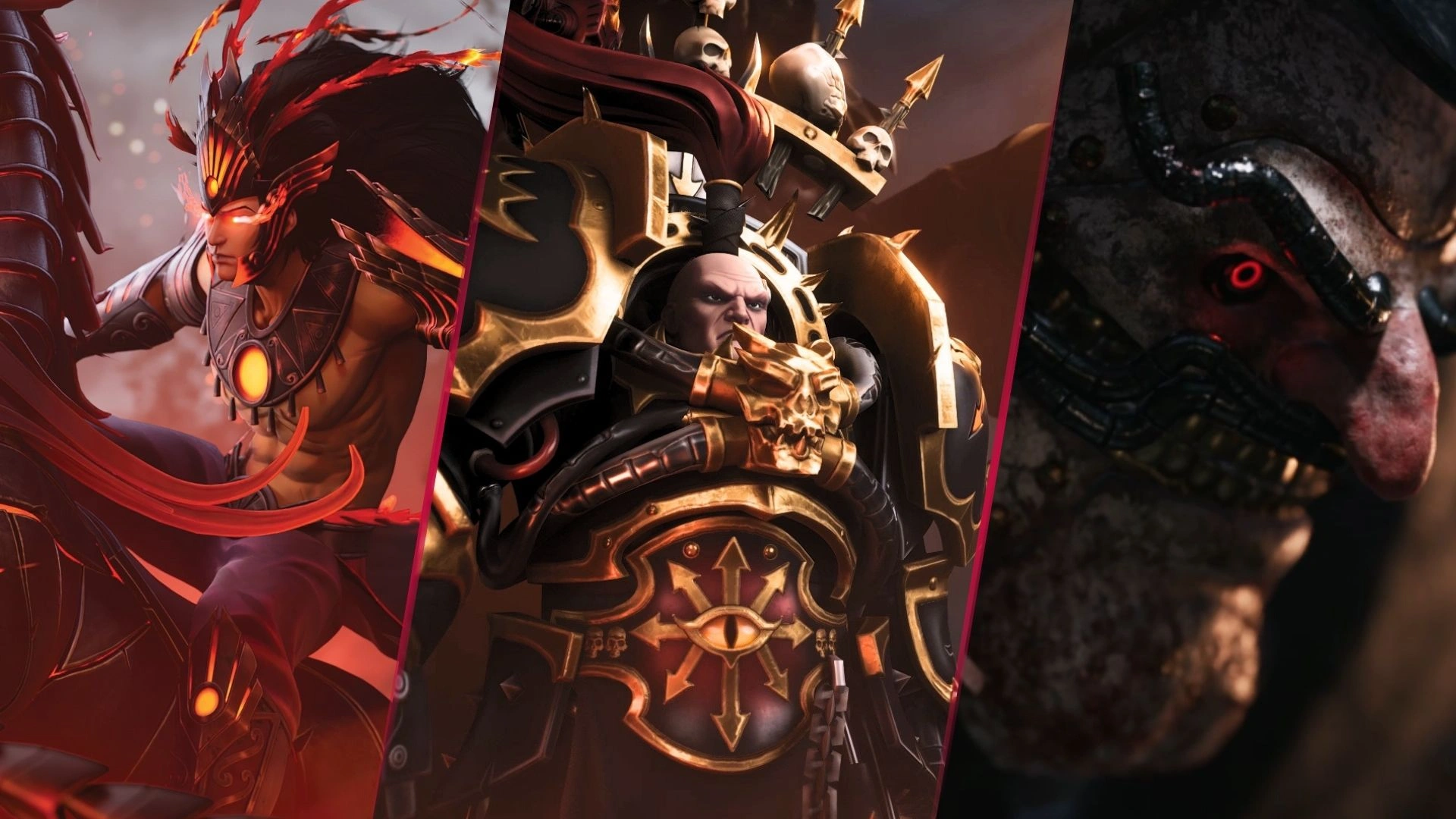
Thunder Cloud Studio has built a strong reputation over the past 11 years, consistently delivering premium quality art for live service games. We are proud to have been a primary external art supplement for renowned projects like Monopoly Go, League of Angels, and long-term partnering with major studios such as Scopely, MTG, Yoozoo and IGG, etc showcases our ability to meet the dynamic needs of the gaming industry
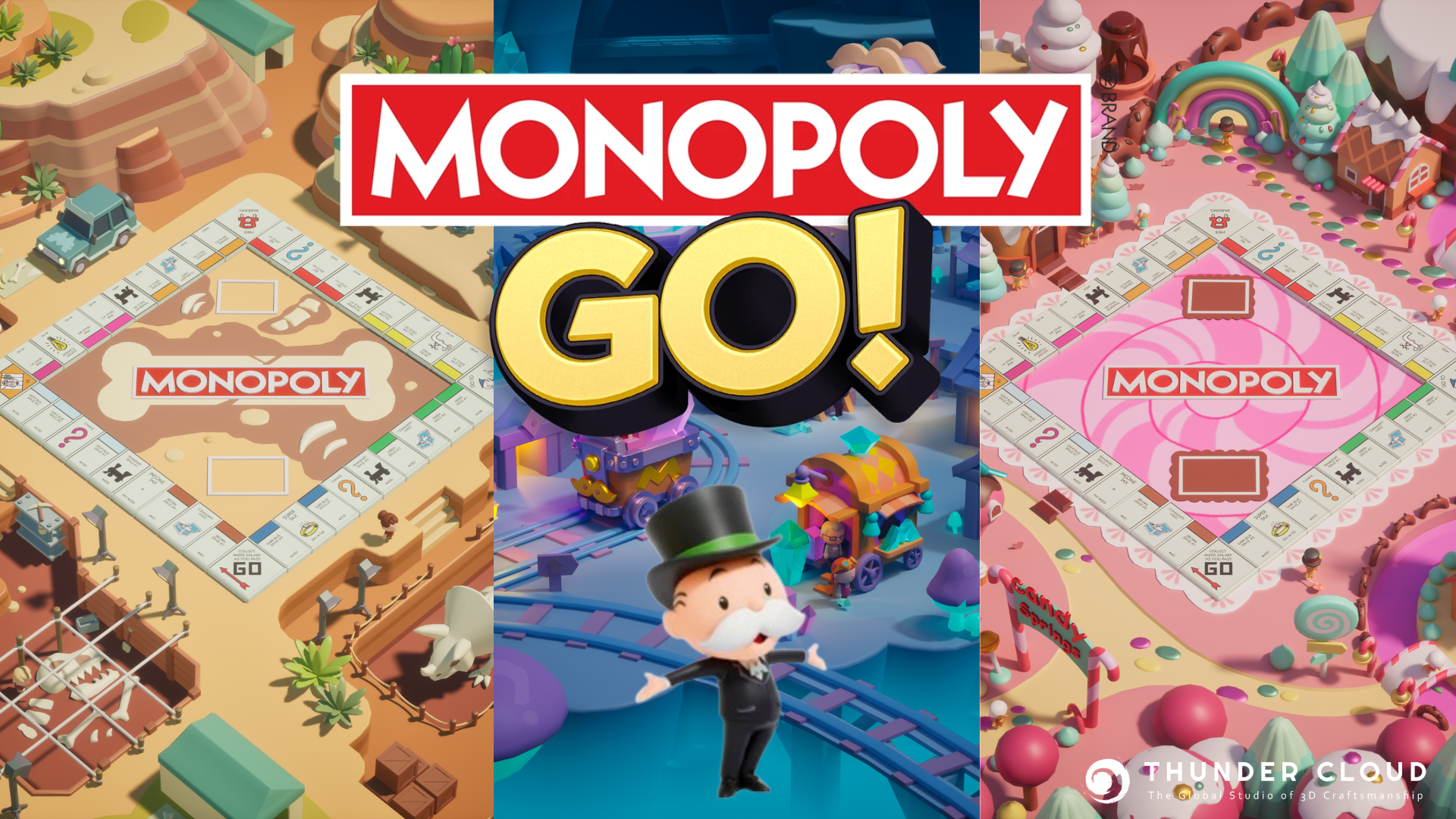
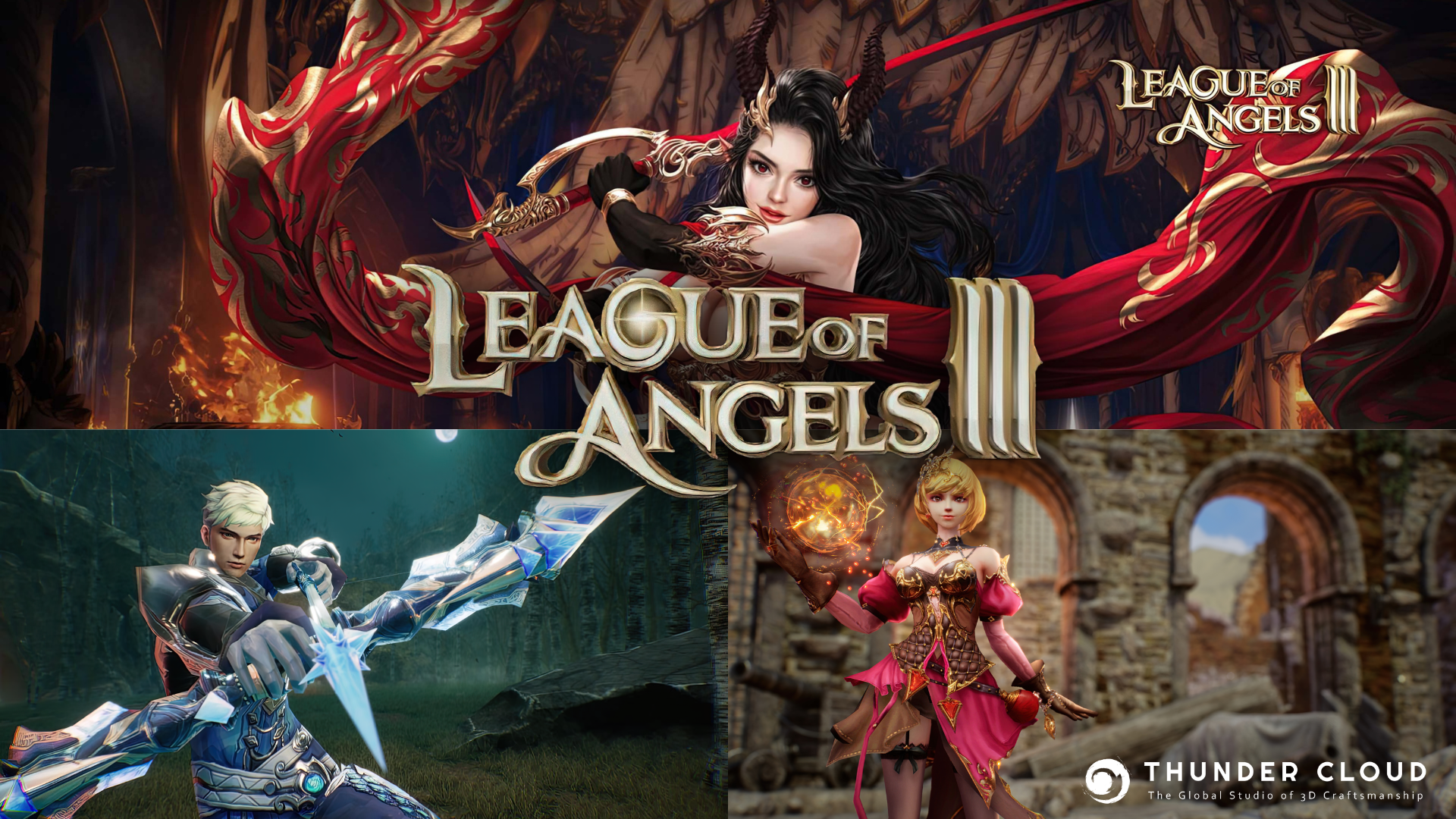
Our team, with over 100 staff, specialize in full packages from 2D Concept art to 3D modeling, animation, engine integration and promotional trailers. With many years of experience in the industry, we have optimized the production pipeline to ensure that it meets clients’ requirements. We are all about delivering premium-quality and services at prices that offer incredible value. In addition, we have established a strict QA system to ensure AAA quality for every asset along with a pool of talented artists. Thunder Cloud Studio is confident to provide you with the visual standard required for top live service games
Future of Continuous Art Creation in the market
The need for continuous art creation is growing as developers look to differentiate their games in a saturated market. According to a Newzoo report, by 2026, over 90% of new game releases are expected to include a live service component, driven by the growing demand for continuous updates . This trend is already taking shape, with major players like Ubisoft shifting their focus and resources toward live service game models to meet this demand.
In a future where the gaming market is more crowded than ever, continuous art creation will be a differentiator for studios that can consistently deliver rich, visually engaging updates. Developers who invest in frequent, trend-responsive updates will have a strategic advantage, as they’ll be better positioned to capture loyal player communities and drive long-term engagement.
Conclusion
As the gaming industry grows more competitive, continuous art creation is becoming a key factor in keeping players engaged in live service games (LSGs). Regular updates that bring fresh visuals, exciting new content, and immersive experiences are no longer just a luxury—they’re essential for staying relevant in today’s fast-paced gaming world. By meeting the evolving demands of players and staying on top of trends, developers can create a stronger connection with their community, building anticipation and keeping interest high.
Thunder Cloud Studio is proud to be part of this shift. We offering the expertise and high-quality solutions that help developers keep their games visually captivating. Our team ensures every project is handled with care and delivering cost-effective art production. Which aligns with your game’s vision and keeps players coming back for more. As the demand for continuous updates grows, having a trusted partner like Thunder Cloud Studio will bring benefits. The collaboration can make all the difference in creating games that stand out. As well as sustain long-term player engagement, and succeed in the ever-evolving market.
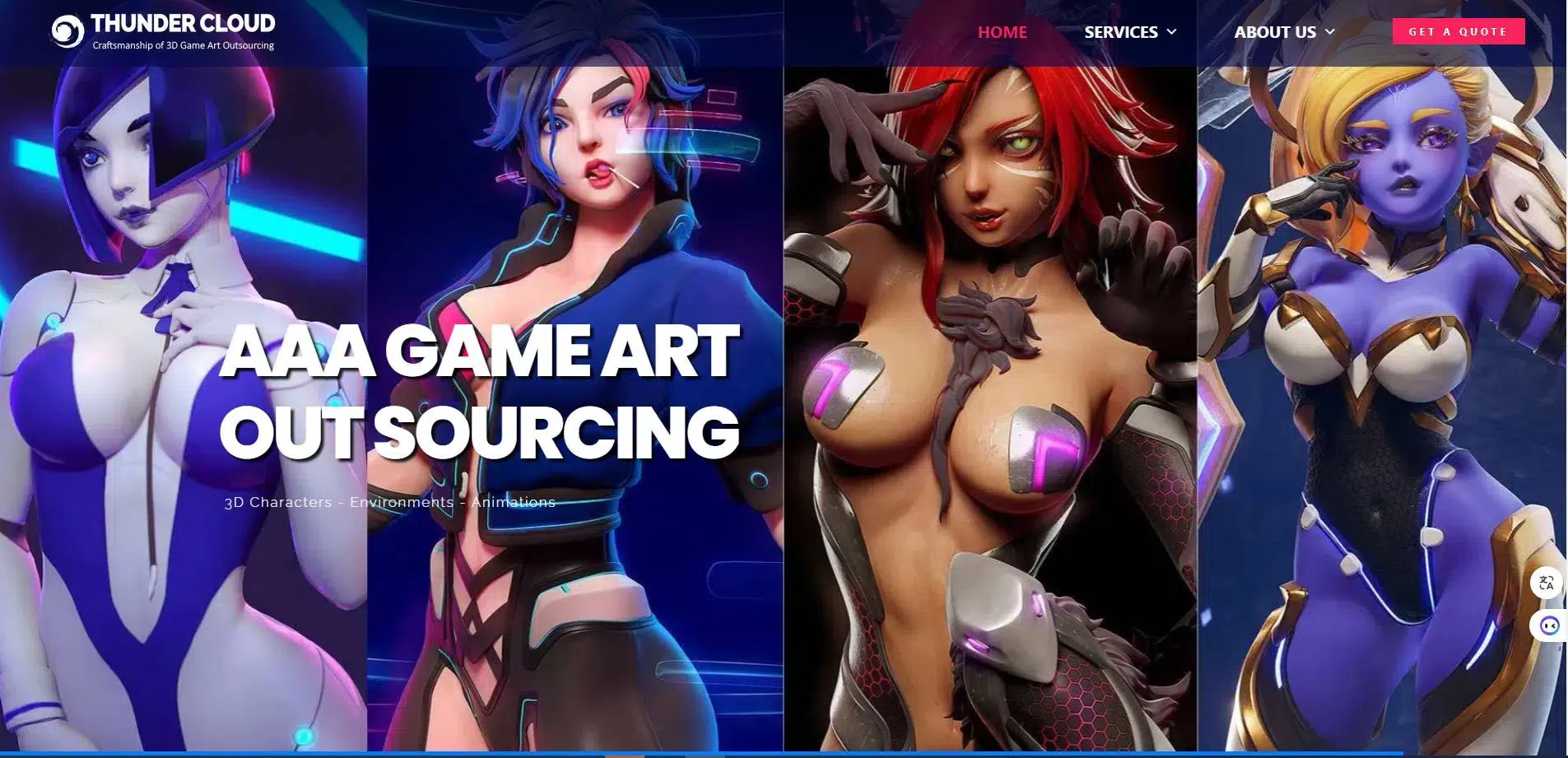
We have also completed numerous other projects across various genres. Feel free to explore more at:
Artstation: https://www.artstation.com/thundercloudstudio
Website: https://thundercloud-studio.com/