


Building Environments for Game Trailers: A Complete Guide for AAA-Quality Production
Why Environment Design Is a Strategic Decision, Not a Cosmetic One
Viewers’ attention windows are shrinking across platforms, so the environment in the opening frames of a trailer must serve as an emotional hook. The setting isn’t just decoration but it establishes tone, scale, and narrative context within seconds. In a market where every second matters, so the 3D game environment design becomes a strategic investment rather than a visual luxury.
The Power of Worldbuilding in Capturing Audience Emotion
It helps immediately immerse the viewer in the tone or environment. With attention spans dropping, the first few seconds of a trailer must grip the audience. A well-crafted environment does this by conveying emotion and atmosphere before a single line of dialogue. Strong environments also make characters and stories more memorable, anchoring them within a coherent visual world that deepens audience connection.
From Marketing to Player Retention – The Hidden ROI of Visual Worldbuilding
High-quality environments impact more than aesthetics. They shape how players perceive the brand, influence pre-orders, and even contribute to long-term engagement. Consistency between trailer visuals and in-game experiences reinforces trust, while distinct worldbuilding helps a title stand out in crowded markets.
How AAA Publishers Use Environments to Differentiate Their Trailers
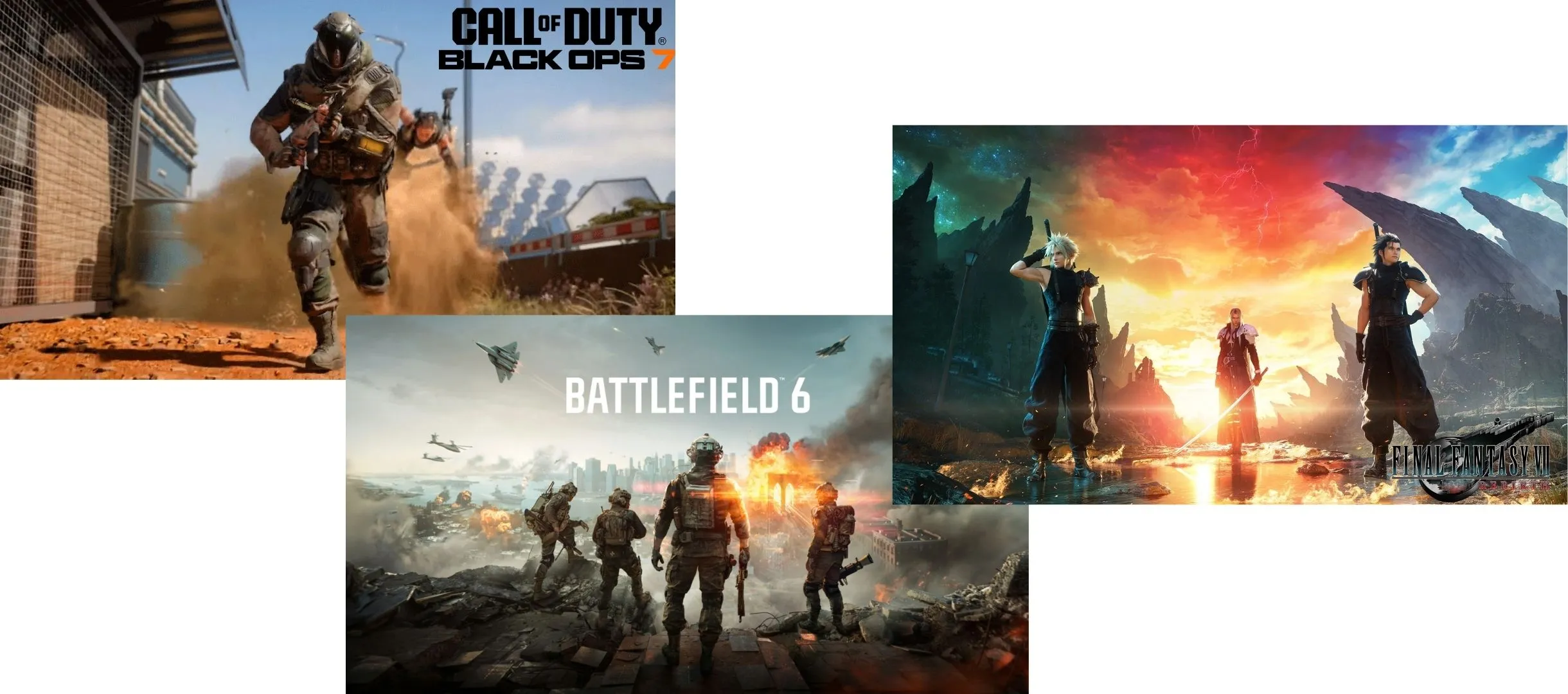
Recent AAA trailers showcase how environment design drives emotional and visual impact:
- Call of Duty: Black Ops 7 – Combines cinematic staging with sharp pacing and dynamic lighting to create intensity and narrative urgency.
- Battlefield 6 – Uses large-scale destruction and spatial chaos to emphasize spectacle and technological power.
- Final Fantasy series (e.g., FFVII Rebirth, FFXVI) – Emphasizes stylized realism, painterly lighting, and emotionally charged locations that heighten the lore-driven storytelling.
Each of these titles relies on environmental storytelling to define tone and differentiate its marketing identity.
Understanding Trailer Production Pipelines
In-Game and Cinematic Trailer Definitions
In-game trailers are typically captured directly within the engine, using gameplay assets and systems to showcase mechanics or live-ops content. Cinematic trailers, on the other hand, prioritize narrative and visual spectacle, which are often built as standalone short films with bespoke lighting, animation, and VFX.
Why Environment Pipelines Differ Despite Shared IP and Art Direction
While both trailer types may share a universe, their production priorities differ. In-game trailers must maintain performance fidelity and real-time efficiency, while cinematic trailers focus on visual precision, framing, and storytelling. These pipeline differences affect asset detail, lighting workflows, and review cycles.
The Difference Between Environments in In-Game and Cinematic Trailers
Environments for In-Game Trailers
In-game trailers often reuse existing levels or assets but enhance them for cinematic presentation. Refinements include shader updates, advanced lighting, camera reblocking, and character animation staging. Small adjustments to layout and composition make scenes feel new while maintaining authenticity.
This approach is cost-efficient and time-saving, especially for live-ops updates or character reveals. Studios can achieve cinematic flair without full environment rebuilds.

Environments for Cinematic Trailers
Cinematic trailers, built for storytelling and emotional resonance, usually require environments created from scratch or heavily reworked from the game. Assets are produced at higher fidelity, with detailed textures, volumetric lighting, and elaborate FX. Composition, depth of field, and motion design all play a part in achieving film-quality visuals.
While this process demands more time and resources, it delivers the visual grandeur expected from high-end marketing campaigns.
Why Outsourcing Environment Production Makes Sense for Game Trailers
The Role of Outsourcing
Outsourcing brings access to specialized talent and parallel production pipelines. It helps studios scale trailer production without overloading internal teams, ensuring quality remains consistent across multiple deliverables.
Outsourcing Collaboration Model for In-Game vs Cinematic Trailers
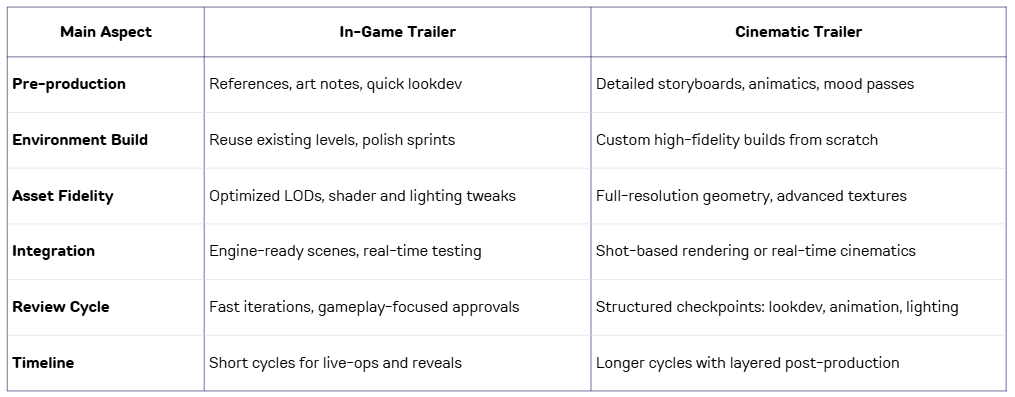
By aligning production scope with trailer type, outsourcing partners can optimize both quality and efficiency.
Common Mistakes in Trailer Environments
- Visual gap between trailer and final game: Overpromising visual fidelity damages credibility.
- Overproduction waste: Building cinematic assets for short shots without reusability in mind.
- Poor storytelling layout: Ineffective scene composition that distracts from key narrative beats.
- Late lighting or lookdev alignment: Delays that create rework cycles and misaligned visuals.
Case Insight: What We Can Learn from AAA Trailers
- Battlefield 6 demonstrates how environmental chaos reinforces gameplay identity and visual energy.
- Call of Duty: Black Ops 7 blends cinematic and gameplay environments for intensity and recognizability.
- Final Fantasy titles show how stylized realism and emotionally resonant locales define long-term brand memory.
Summary and Actionable Takeaways
- Treat environments as emotional anchors, not background decoration.
- Distinguish between in-game and cinematic pipeline requirements early.
- Use outsourcing strategically to scale production and maintain quality.
- Prioritize storytelling, lighting, and composition to elevate engagement.
Partner with professionals who understand both the artistic and technical nuances of trailer production.
Explore Professional Cinematic Trailer Production Services at Thunder Cloud Studio to see how we help studios craft worlds that captivate audiences.