

2D Game Art Outsourcing Cost Breakdown: How to Think About Cost, Not Just Numbers
2D Game Art Outsourcing Cost Overview (TL;DR)
When studios research 2D game art outsourcing, cost is usually the first concern, but also the most misunderstood. In real production, cost is rarely driven by asset count alone.
Instead, 2D art production costs are shaped by scope clarity, production expectations, and workflow maturity.
Across the industry, 2D art outsourcing rates tend to fall into relative tiers rather than fixed prices:
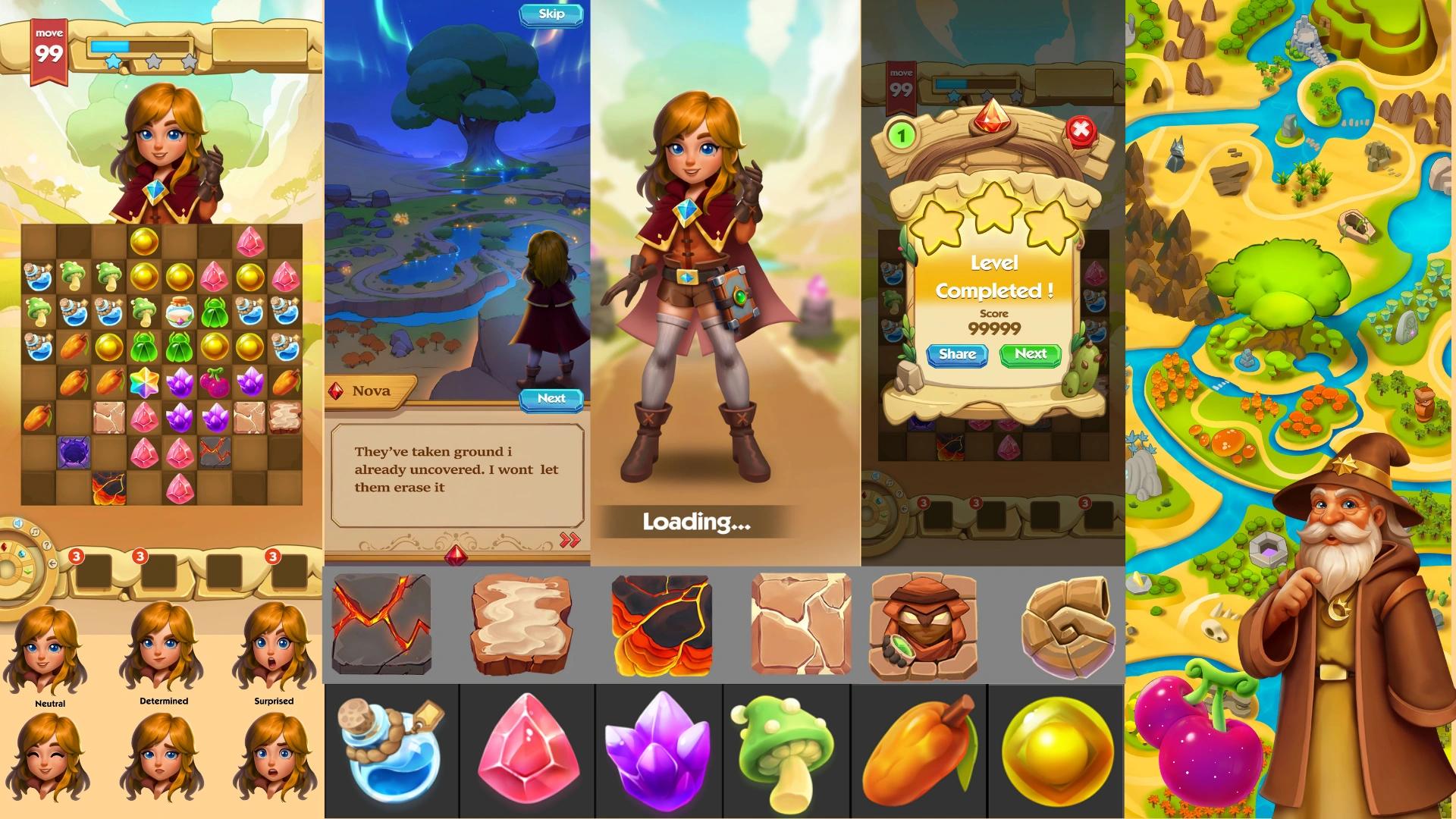
- Casual level work: Simple props, UI and game assets with low complexity
- Mid-tier work: More complex assets like characters and background
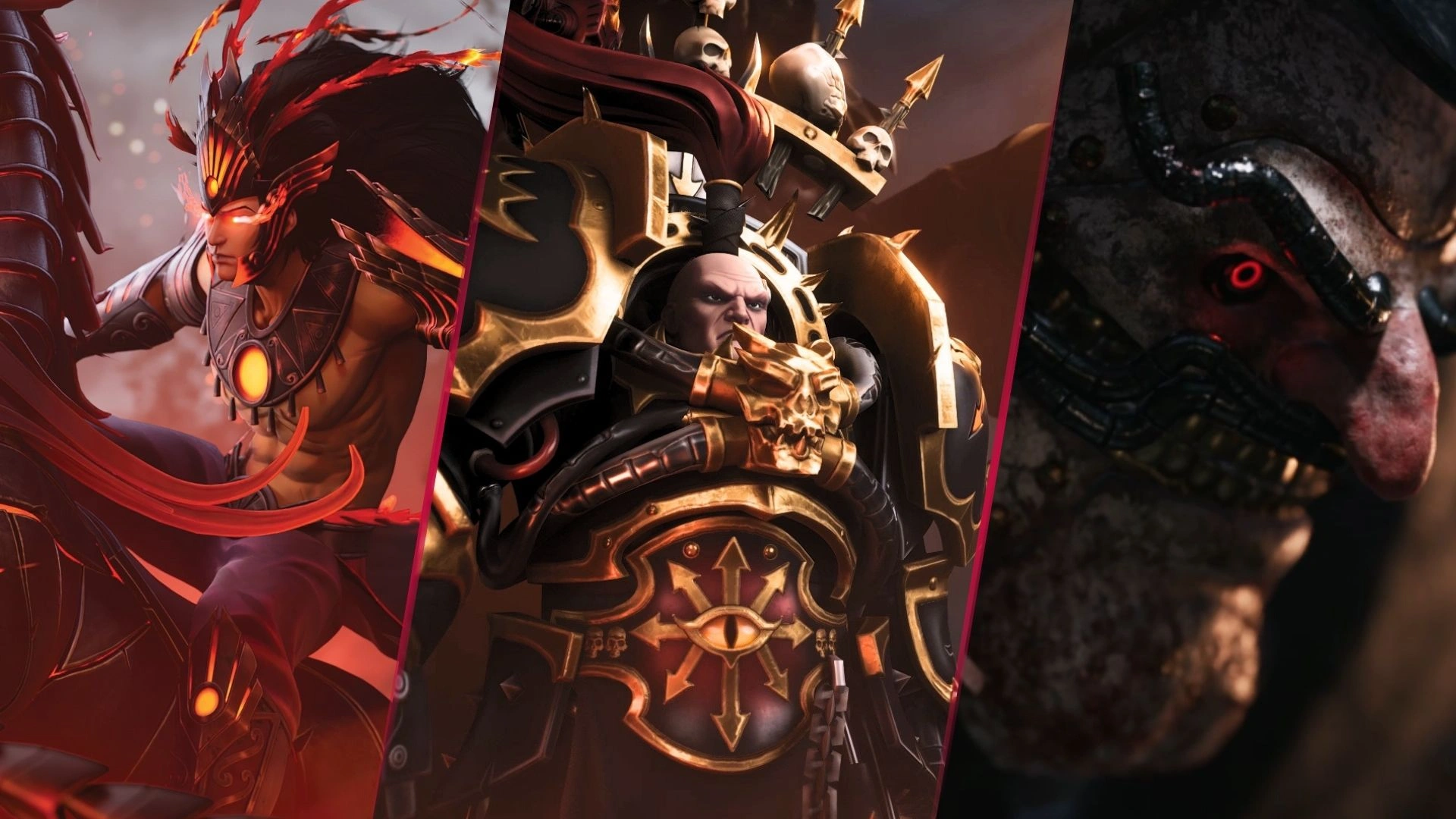
- Premium work: High-fidelity key visuals, flagship character art and illustration.
In practice, Premium-quality 2D illustration typically requires several times more production effort than Casual-level work. Understanding why that happens is far more useful for outsourcing budget planning than chasing exact numbers.
1. Defining 2D Art Scope Before Talking About Cost
Cost discussions only make sense after scope is clearly defined. In 2D game art outsourcing, different asset categories follow different production paths and cost behaviors.
Common illustration-focused scopes include:
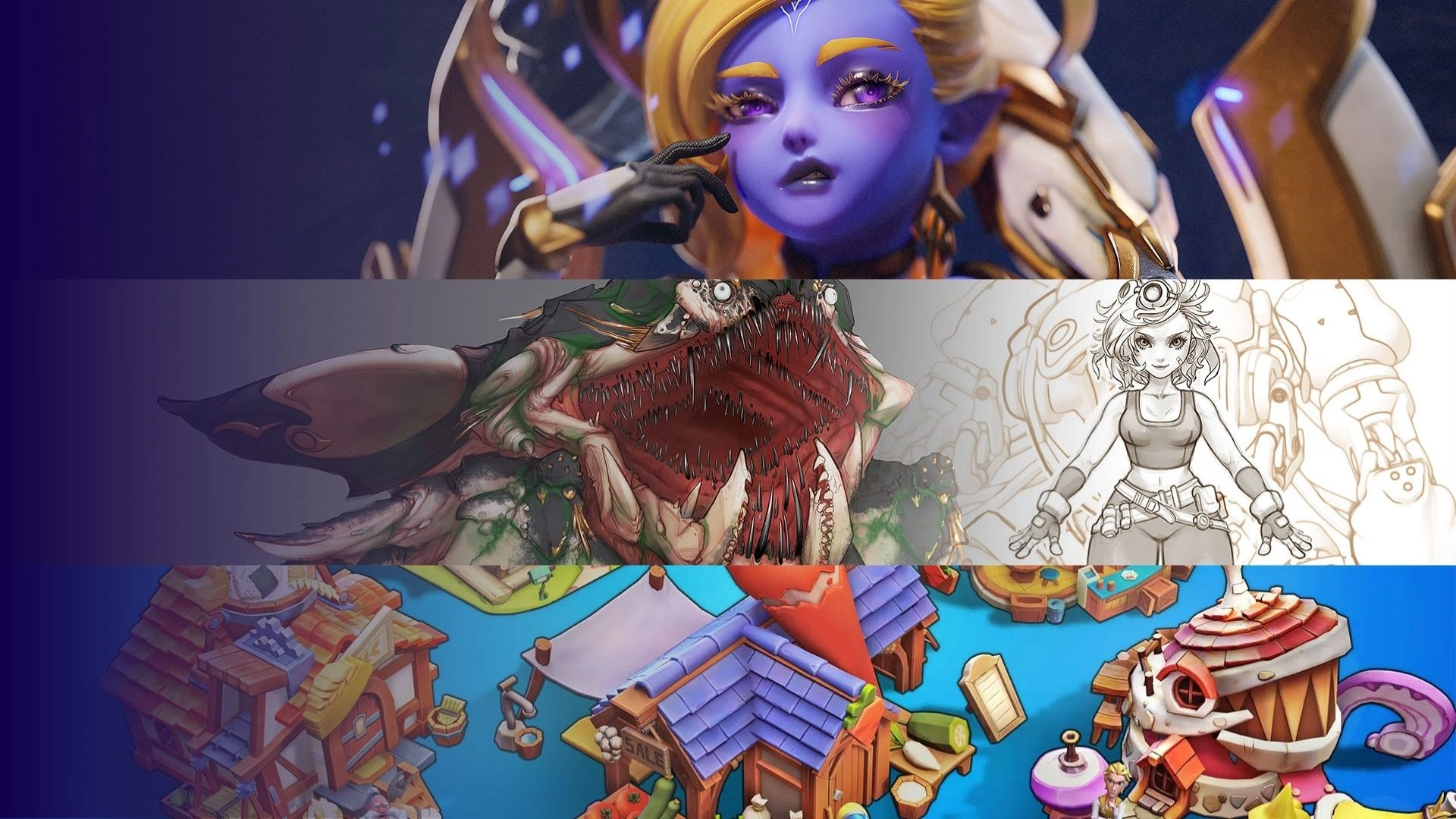
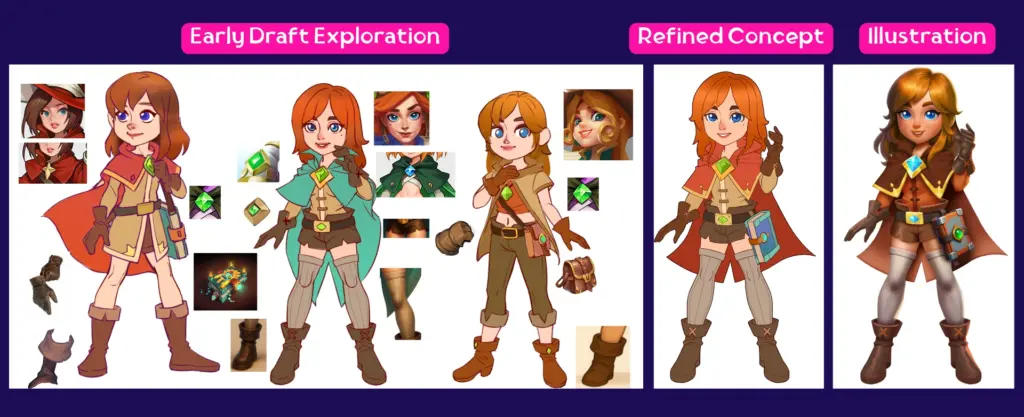
2D character design and Illustration
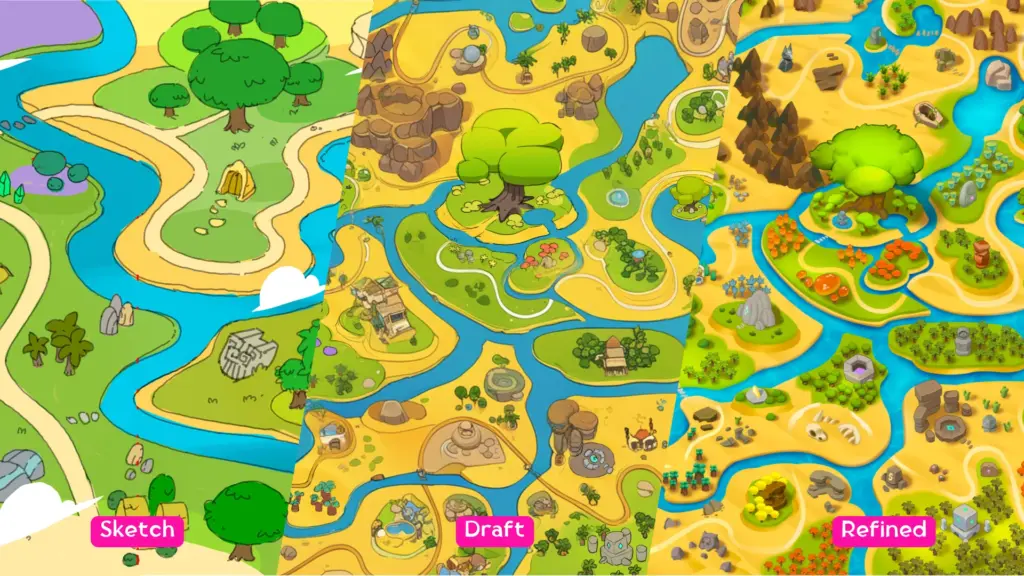
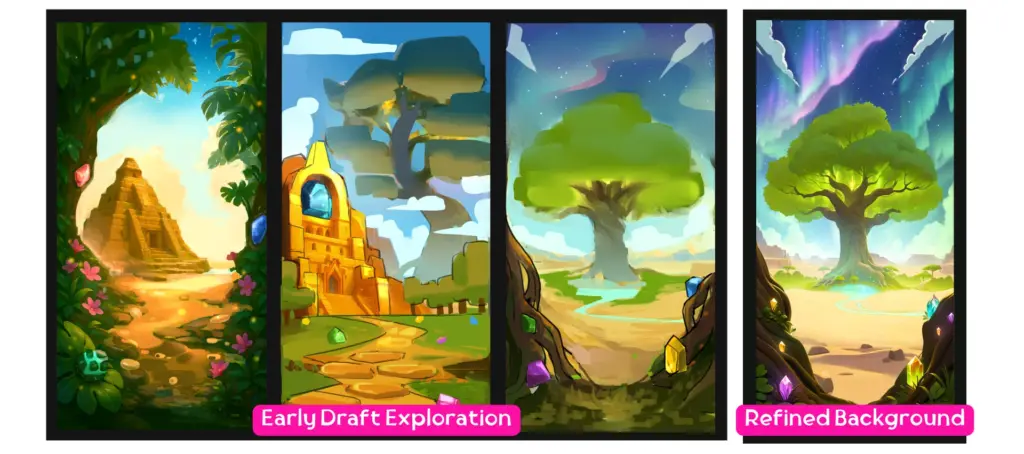
Environment and Background Illustration
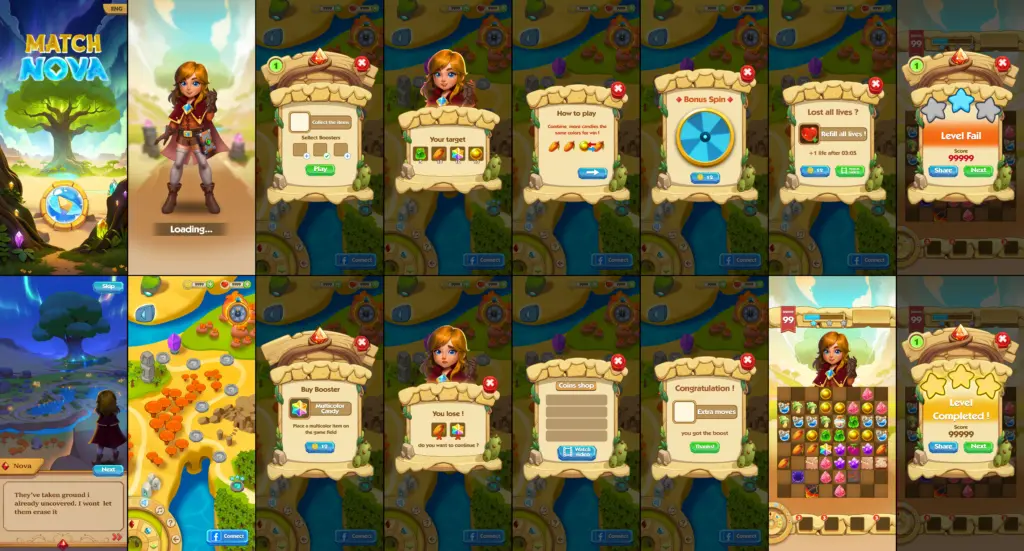
UI and Visual Interface Design
Key Art and Marketing Illustration
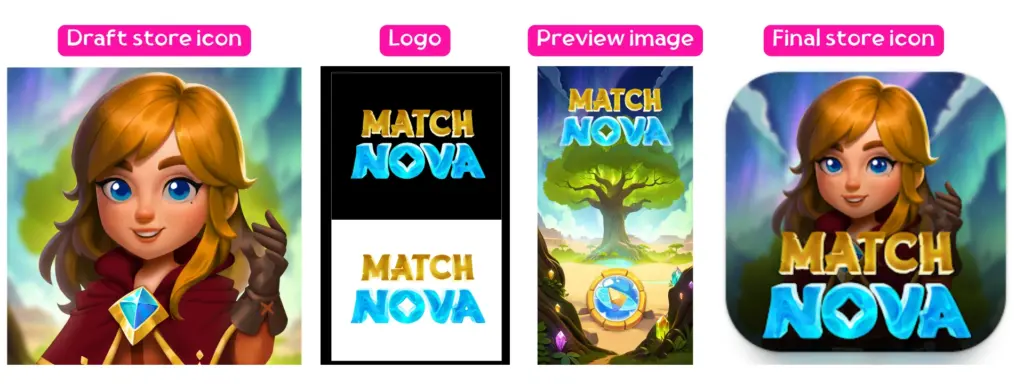
Just as important as asset type is the production stage.
Costs change significantly as work moves from:
- Early draft exploration (ideation, visual direction, loose iteration)
- to production-ready artwork (final polish, consistency, handoff-ready assets)
Across all scopes, production-stage expectations usually have a greater impact on cost than the asset category itself. Art style choices, such as stylized versus semi-realistic rendering, further amplify these differences.
In practice, studios that specialize in illustration-focused 2D game art services, including teams like Thunder Cloud Studio, tend to align scope definition closely with production workflows to reduce cost volatility later in the pipeline.
2. Cost Behavior by Asset Category in 2D Game Art Outsourcing
Instead of fixed pricing, the table below illustrates how cost typically behaves across major 2D art scopes based on production effort. Most 2D game art outsourcing studios structure pricing based on asset category because each category follows a different production workflow and review cadence.
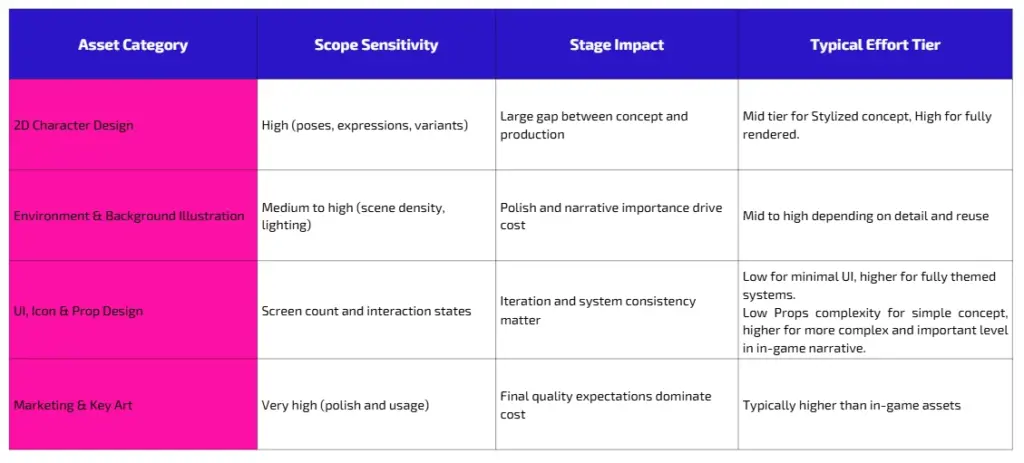
These comparisons help normalize expectations before any vendor discussion or outsourcing budget planning begins.
3. Typical Price Ranges in 2D Game Art Outsourcing (Industry Snapshot)
While cost logic matters more than exact figures, studios often still need a practical reference point when planning an outsourcing budget.
Based on publicly available industry data and common outsourcing engagements worldwide, the ranges below illustrate what studios typically allocate for illustration-focused 2D game art work.
These figures are not quotes. They are intended as high-level benchmarks, assuming clear scope, standard production pipelines, and professional studio-level delivery.
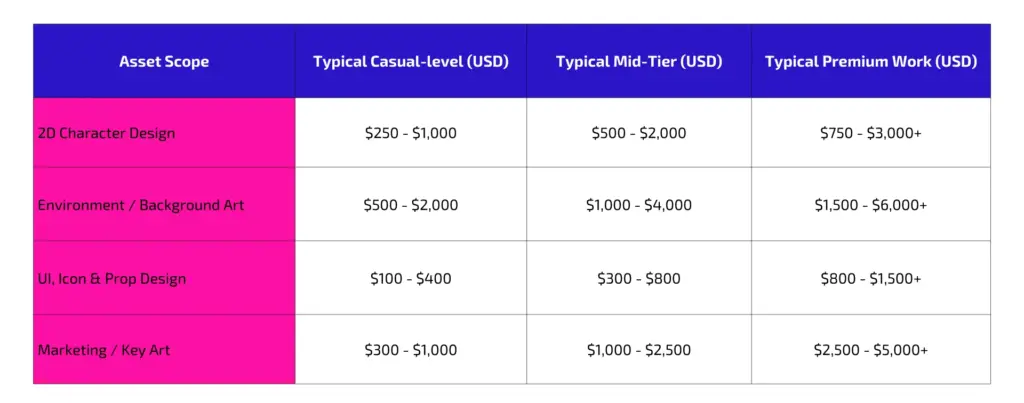
Mid-tier and premium work often costs multiple times more than entry-level work.
This difference is usually driven by rendering depth, revision cycles, and consistency requirements, not by asset count alone.
Actual costs depend on the six variables outlined in the next section.
4. The Six Variables That Actually Drive Cost
Across scopes and regions, 2D art outsourcing pricing is shaped by the same core variables. These factors explain why a project costs what it costs at the quote level, before production begins:
- Art style complexity – higher realism and rendering increase effort
- Revision cycles – unclear direction expands iteration cost
- Art direction involvement – guidance vs execution-only work
- Technical requirements – formats, layering, engine constraints
- Timeline pressure – compressed schedules increase cost
- Workflow maturity – stable pipelines reduce inefficiency
A practical way to think about outsourcing cost is:
Cost = Complexity × Clarity × Workflow Maturity
This model explains why similar-looking scopes can produce very different quotes, even before production starts.
In practice, many studios are less concerned with minimizing cost than with finding the right balance between visual quality and budget constraints, especially as production scales.
5. Pricing Models, Vendor Structure, and Cost Sensitivity
Most 2D game art outsourcing work is priced using one of three common approaches:
- Per-asset pricing, which works best when the scope is very clear and unlikely to change
- Artist-based pricing, often used for ongoing production or live operations where priorities shift over time
- Project-based pricing, suited to fixed deliverables with well-defined requirements
Costs stay more predictable when the pricing model matches how the work is actually produced. Issues usually arise when priorities shift but the pricing structure stays the same.
Geographic Location and Vendor Structure
Vendor setup and geographic location also influence how pricing behaves. While base rates can vary by region, factors like workflow maturity, communication efficiency, time-zone alignment, and production infrastructure often matter more to total project cost.
Consider these factors when evaluating international vendors:
- Communication efficiency and time-zone overlap
- Pipeline maturity and revision management capabilities
- Technical infrastructure and file handling processes
- Shared visual vocabulary and reference interpretation
Lower hourly rates can be offset by higher revision cycles or communication overhead. Studios evaluating vendors should assess total project cost and workflow compatibility rather than comparing base rates in isolation.
6. Production Pipeline Transparency and Cost Predictability
While the variables above explain how costs are formed, production pipelines determine how well those costs hold up over time.
Clear production pipelines make 2D art production costs easier to predict once work is underway.
When everyone shares the same definition of “approved,” “in progress,” and “final,” revisions are easier to manage and scope creep is less likely to go unnoticed.
Costs also stay more stable when outsourcing studios remain closely connected to internal teams. Shared guidelines and regular check-ins help catch issues early, when changes are still easier and less expensive to fix.
Production Effort Distribution
Across studios worldwide, production effort usually shifts in a consistent way:
- Concept-focused phases allow more room for exploration and iteration, but usually require less polish and execution effort
- Production phases tend to involve fewer revisions, while demanding much higher consistency, refinement, and delivery accuracy
More experienced outsourcing studios often plan work using estimated production effort or man-days. This makes cost forecasting more reliable, because it is based on real workload instead of assumptions.
This level of structure is more common in mature outsourcing studios with established production pipelines. It usually leads to better cost predictability with clear asset handoff and a defined point of contact.
7. Cost Pitfalls and Warning Signs in 2D Game Art Outsourcing
Once pricing logic and production mechanics are clear, certain warning signs become easier to spot.
Common pitfalls include:
- Quotes that don’t clearly reflect the actual scope or production stage
- Pricing models that clash with how the work will really be produced
- Offers of unlimited revisions without defining what “done” actually means
- Production pipelines with no clear review or approval checkpoints
- Portfolios that don’t quite match the quality level suggested by the quote
Outsourcing studios generally deliver to the standards they are given.
When visual goals are loosely defined, results may technically meet the brief while still missing production expectations.
These issues usually appear later in production, when changes take longer, cost more, and are harder to undo.
FAQs About 2D Game Art Outsourcing Costs
2D game art outsourcing costs vary based on scope, art style, production stage, and workflow maturity. The pricing table in Section 3 provides directional ranges across common quality tiers.
The same asset can cost significantly more at the production stage than at the concept stage. For example, a production-ready character with multiple expressions and higher rendering typically costs 2-4x more than a single-pose concept due to added refinement and consistency requirements.
Inclusions depend heavily on scope.
Basic quotes often cover a single final view, while higher-tier quotes may include multiple angles, expression sets, color variants, and layered source files. Clarifying what “one character” includes is critical, as assumptions around revisions and variants drive most pricing gaps.
Not necessarily.
Lower quotes often reflect narrower scope, fewer revisions, or lower production expectations. Always confirm that vendors are pricing comparable deliverables and workflows. A lower rate can be offset by rework or misalignment later in production.
Accurate outsourcing budget planning starts with clear scope definition and realistic production stages.
Studios improve predictability by defining deliverables upfront, aligning on revision limits, choosing pricing models that match production cadence, and setting aside contingency for scope changes. Teams that do this typically achieve more stable costs over the course of production.
Closing Perspective
Reliable 2D game art outsourcing is not about finding the cheapest option.
It is about understanding how scope, production expectations, and workflow maturity interact to shape cost over time.
Studios that approach outsourcing with this mindset gain better predictability, stronger partnerships, and more consistent visual results.
Ready to Plan Your Next 2D Casual Game Project?
For project-specific needs, contact Thunder Cloud Studio for a tailored quotation based on your requirements, timeline, and quality targets. The team will help you scope your project clearly and provide transparent pricing aligned with your production goals.